Baking Moulds & Pans
also called baking tins, cake tins
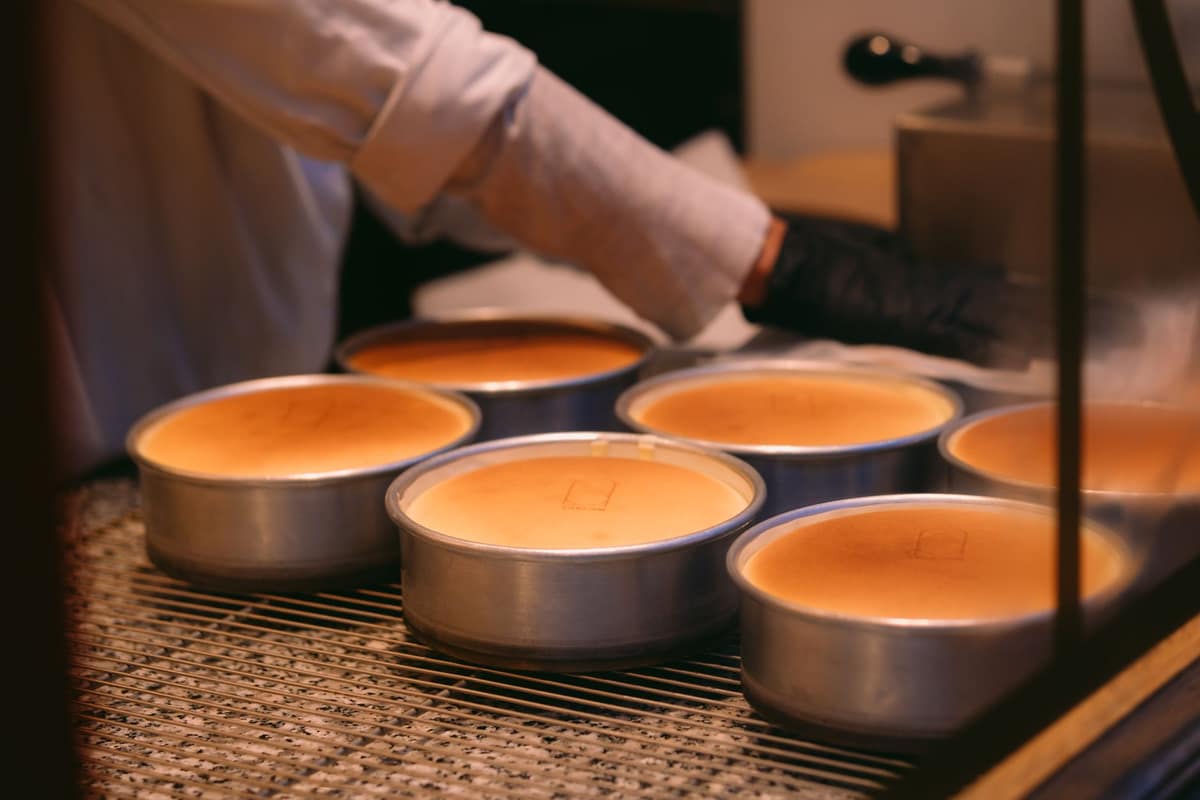
Baking tins are the moulds that hold batter while it bakes, setting the cake's shape and shaping how its edges brown. Material and colour matter more than beginners expect: dark tins absorb heat quickly and brown edges deeply, while light, shiny tins reflect heat for a gentler, paler bake. Springform tins add a removable side for delicate cakes that cannot be turned out upside down.
Unlocks
What it is
A baking tin is simply a heat-conducting wall around your batter — but the wall's character changes the bake. Metal tins conduct heat briskly and give well-browned edges; glass and ceramic heat slowly and hold that heat long after, so bakes keep cooking at the rim; silicone barely browns at all. Shape matters too: round tins suit layer cakes, square ones suit brownies and tray bakes, loaf tins suit tea cakes and breads, and a springform's clasp-released side lets fragile cheesecakes and mousse cakes stay upright while the tin comes away from them.
Materials and how you prepare them
Aluminium tins, flexible silicone moulds and springform tins can all bake a cake to much the same result — but how you prepare each for a clean release differs by material, and that is where beginners come unstuck. An aluminium tin is greased and lined, its film of fat and fitted parchment doing the releasing. Silicone often needs little to no greasing at all, since the flexible mould peels away from a set bake on its own. A springform needs its base lined and its clasp checked and locked before the batter goes in, so nothing leaks and the ring lifts away cleanly. Match the preparation to the material rather than greasing everything by the same habit.
Why it matters
The same batter can come out noticeably different depending on the tin. A dark tin races ahead at the edges, giving a deeper crust and sometimes a slightly domed centre; a light tin bakes more evenly and forgivingly, which is why it is the kinder choice for a first-timer. Depth counts as well — batter in a shallow tin bakes fast and dry-prone, while the same amount in a deep, narrow tin needs longer and gentler heat to cook through without over-browning outside.
Common mistakes
The classic beginner error is swapping tin shapes or sizes casually — a recipe written for one tin will over- or under-fill another, and the bake time shifts with it. Trust sensory cues over the clock when your tin differs: a done cake springs back and pulls slightly from the sides. Other traps: skipping greasing and lining and losing half the cake to the tin, buying a springform for everything (its seam can leak thin batters), and forgetting that in a small Indian OTG a dark tin browns even faster because the element sits close.
At Love Made Edible
Every cake we bake starts in a tin chosen for that batter — the shape and finish of the tin is decided long before the frosting is.
Related terms
Frequently Asked Questions
Which baking tin should a beginner buy first?
A single sturdy, light-coloured round tin of ordinary layer-cake proportions will carry you through most beginner recipes. Light metal bakes evenly and forgives small timing errors, and a round shape suits birthday cakes, sponges and everyday tea cakes alike. Add a square tin for brownies once the round one feels familiar.
Why do dark and light tins bake differently?
Dark surfaces absorb heat and pass it into the batter quickly, so edges and bases brown faster and deeper — sometimes before the centre is done. Light, shiny surfaces reflect part of the oven's heat away, giving a slower, more even bake with paler sides. Neither is wrong; dark tins just need a watchful eye and often a slightly gentler oven.
Which type of tin should I buy, and does prep differ?
For most beginners a light aluminium tin is the sensible first buy; add a silicone mould for easy release and a springform once you bake fragile cheesecakes. They can give similar results, but preparation differs by material: aluminium is greased and lined, silicone often needs little to no greasing since the flexible mould peels away on its own, and a springform needs its base lined and its clasp checked and locked so thin batters can't leak. Match the prep to the material rather than greasing everything the same way.
Tastethetechnique
Everything in our kitchen is baked fresh to order — eggless and vegan variants available.